
Die Casting Parts & Products: Types, Applications, and Manufacturing Process Explained
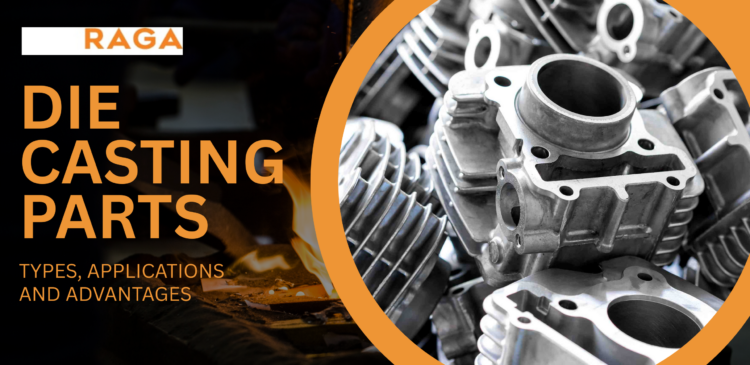
Melted metal is injected under high pressure into a steel mold, known as a die, in the die casting process. This process is frequently used to create die casting products and die casting parts with superior surface finishes, high precision, and repeatability. Die casting makes it possible to produce metal components in large quantities with remarkable accuracy and economy, from consumer electronics to automobiles.
What Are Die Casting Parts?
Definition & Core Characteristics
Melted metal is pushed under intense pressure into a hardened steel die to create die casting parts. Dimensional accuracy and consistent shapes are guaranteed by the procedure.
These parts are known for:
- High strength and hardness
- Tight tolerances
- Smooth surface finishes
- Excellent repeatability
Key Materials Used
Die casting products are typically made from non-ferrous metals such as:
- Aluminum: Lightweight, corrosion-resistant, widely used in automotive and aerospace.
- Zinc: Ideal for thin walls and intricate details; commonly used in electronics.
- Magnesium: Lightweight and strong, perfect for portable electronic devices.
- Copper & Brass: Known for excellent electrical conductivity and aesthetic appeal.
Types of Die Casting Parts
By Material
- Aluminum Die Casting Parts: Used in engines, housings, and heat sinks.
- Zinc Die Casting Parts: Found in connectors, locks, and fittings.
- Magnesium Die Casting Parts: Common in electronics, automotive dashboards, and mobile devices.
By Function/Use
- Structural Parts: Such as brackets, enclosures, and support frames in automobiles and machinery.
- Decorative Parts: Finely finished parts like knobs, door handles, and frames.
- Precision Components: Miniature and intricate parts used in medical devices, telecom, and consumer electronics.
Standard vs. Custom Die Casting Products
- Standard: Ready-made parts conforming to industry standards.
- Custom: Customised components manufactured to fit unique specifications using 3D CAD design and custom molds.
Common Die Casting Products by Industry
Automotive
- Engine blocks
- Transmission cases
- Valve covers
Electrical & Electronics
- Enclosures
- Heat sinks
- Switch housings
Industrial Machinery
- Gearboxes
- Pump casings
- Mounting brackets
Consumer Goods
- Appliance casings
- Furniture accessories
- Lighting components
Aerospace & Defense
- Lightweight frames
- Actuator housings
- High-strength brackets
Benefits of Using Die Casting Parts
- Post-processing requirements are decreased by high dimensional accuracy.
- A smooth surface finish makes painting or coating simple.
- Rapid production rate for manufacturing in large quantities.
- Material savings as a result of careful material usage.
- Cost-effectiveness in lengthy production cycles.
- Sustainability is supported by metals’ ability to be recycled.
Die Casting Process – How Parts Are Made
Cold Chamber vs. Hot Chamber
- Cold Chamber: Perfect for copper and aluminum alloys that need to be melted separately.
- Hot Chamber: Used for magnesium and zinc, this chamber keeps molten metal inside the casting machine..
Die Design and Mold Setup
A die consists of two halves – the cover and ejector dies. Important features include:
- Cooling systems for temperature control
- Ejector pins for part removal
- Runner and gate design to ensure even flow
Finishing & Quality Control
Post-casting processes include:
- Deburring and trimming.
- Surface treatments like powder coating or plating.
- CNC machining for high-tolerance areas.
- X-ray and ultrasonic testing to detect internal defects.
How to Choose the Right Die Casting Products Supplier
- Experience in your industry and with relevant materials
- Certifications like ISO 9001 or IATF 16949
- In-house tooling and prototyping capabilities
- Ability to scale production globally
- Dedicated support for design, logistics, and customization
Conclusion
Die casting is necessary to produce precise, robust, and lightweight metal components. Selecting the appropriate die casting products guarantees dependability, performance, and cost savings whether for industrial machinery, electronics, or automobiles.
Do you require products made with custom die casting? For a quote or technical consultation, get in touch with us right now.
FAQs
What are die casting parts used for?
They are utilized in a variety of industries, including electronics, automotive, and aerospace, for parts that need to be strong, accurate, and long-lasting.
What is the difference between die casting and other casting methods?
In contrast to sand or investment casting, die casting uses steel dies and high pressure to produce products more quickly and accurately.
Can I customize die casting products for my business?
Yes, die casting uses sophisticated tooling and mold-making to support highly customized designs.
What materials are commonly used in die casting parts?
Aluminum, zinc, magnesium, copper, and their alloys.
How strong are die cast metal components?
They are appropriate for demanding applications due to their high tensile strength, wear resistance, and dimensional stability.
