
What is Flash in Die Casting? Causes, Effects & Prevention
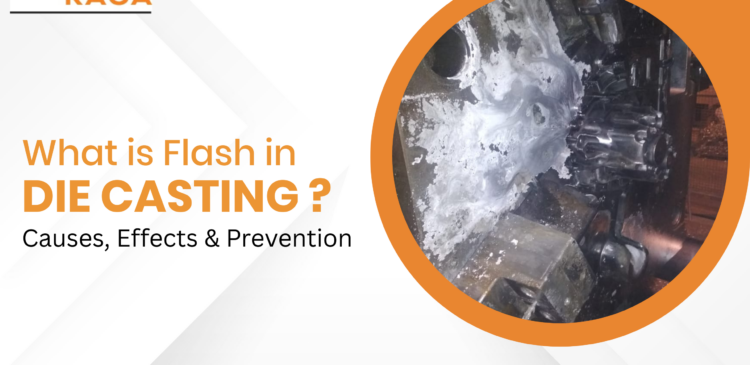
The die casting process is used for producing high-precision metal components in automotive, aerospace, and consumer electronics industries. However, like all manufacturing methods, it comes with surface defects. One of the most common issues manufacturers face is flash in die casting, an unwanted defect that can increase costs and compromise with the quality.
This blog explores what flash in die casting is, its causes, effects, and proven ways to prevent and remove it.
What is Flash in Die Casting?
Flash in die casting is a thin layer of excess metal that leaks out along the die parting lines or around ejector pins during the casting process.
- It usually appears as sharp fins or burrs on the edges of the component.
- Flash occurs when molten metal escapes under high pressure from the mold cavity into tiny gaps in the die.
Although flash is a common defect, controlling it is crucial for maintaining the accuracy and performance of die-cast components.
Causes of Flash in Die Casting
Several factors can lead to the formation of flash:
- Excessive injection pressure forces molten metal into die gaps.
- Improper die clamping force allows leakage.
- Worn-out or damaged die mold creates gaps at the parting line.
- Incorrect die alignment leads to seepage.
- Poor machine maintenance reduces efficiency and precision.
Effects of Flash in Die Casting
Flash affects the appearance and impacts functionality and cost, and thus:
- Requires extra finishing and trimming, eventually increasing cycle time.
- Leads to higher production costs due to rework.
- Reduces dimensional accuracy and surface quality.
- Affects assembly performance, as excess material interferes with fitting.
How to Prevent Flash in Die Casting
Preventing flash is more cost-effective than removing it later. Key prevention methods include:
- Designing dies with tight tolerances and maintaining them regularly.
- Controlling injection parameters such as pressure, speed, and temperature.
- Using high-quality machines, clamps, and locking mechanisms.
- Conducting regular inspection of dies and tooling.
Methods to Remove Flash
When flash does occur, manufacturers use different removal techniques:
- Manual trimming done with hand tools a suitable choice for small volumes.
- Automatic deflashing machines that are efficient for mass production.
- CNC machining or grinding to ensure precise removal.
- Shot blasting or tumbling to improve surface finish after flash removal.
Importance of Flash Control in Die Casting
Maintaining control over flash provides multiple benefits:
- Cost efficiency by reducing rework and finishing.
- Improved durability of components with fewer weak points.
- Better surface finish and dimensional precision.
- Higher customer satisfaction through consistent product quality.
Conclusion
In summary, flash in die casting is an unwanted excess of material caused by high pressure, poor die conditions, or machine issues. While it can be removed through trimming and finishing methods, prevention through proper die design, machine maintenance, and optimized process parameters is always better.
By keeping flash under control, manufacturers can enhance quality, reduce costs, and deliver precision die-cast products consistently.
FAQs
Q1. What does flash mean in die casting?
A1. Flash in die casting is the thin layer of excess metal that seeps out between die parting surfaces during the casting process.
Q2. Why does flash occur in die casting?
A2. It occurs due to high injection pressure, insufficient clamping force, misaligned or worn-out dies.
Q3. How can flash in die casting be removed?
A3. Flash can be removed by trimming, automatic deflashing machines, CNC finishing, or abrasive blasting.
Q4. Can flash in die casting be avoided?
A4. Yes, by using proper die design, maintaining correct machine settings, and ensuring regular die maintenance.
Q5. Does flash affect the quality of die-cast products?
A5. Yes, it increases finishing costs, reduces dimensional precision, and impacts assembly performance.
