
A Complete Guide to Industrial Casting Machines in Modern Manufacturing
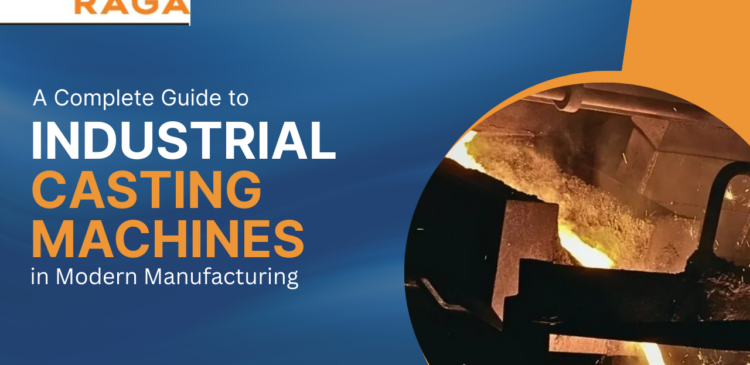
In today’s rapidly evolving manufacturing landscape, industrial casting machines play a crucial role in shaping the world of mass production. These machines are responsible for producing high-quality components used across industries such as automotive, aerospace, and construction.
By enabling the creation of complex and durable metal parts with high precision, casting machines have become the foundation of modern manufacturing systems, ensuring consistency, scalability, and cost efficiency in every production cycle.
What Are Industrial Casting Machines?
Industrial casting machines are advanced equipment designed to melt and pour molten metal into molds to form desired components. Unlike manual casting, where the process depends heavily on human skill and timing, automated casting machines offer greater control, repeatability, and precision.
These machines streamline the metal casting process and ensure uniformity in mechanical properties essential for industries demanding high-strength and defect-free parts.
Types of Industrial Casting Machines
There are several types of industrial casting machines, each suited to specific materials and production needs:
- Die Casting Machines (Hot Chamber & Cold Chamber):
Hot chamber machines are ideal for low-melting metals like zinc and magnesium, while cold chamber machines handle aluminum and copper alloys. These are widely used in automotive and electronics manufacturing. - Sand Casting Machines:
Commonly used for large or heavy parts such as engine blocks or construction components, sand casting allows for excellent flexibility in shape and material. - Investment Casting Machines:
Known for producing high-precision components, especially for aerospace and medical applications, investment casting achieves intricate detailing and smooth surfaces. - Centrifugal Casting Machines:
Used for cylindrical components like pipes and rings, these machines use centrifugal force to distribute molten metal evenly. - Vacuum Die Casting Machines:
A modern innovation that minimizes air entrapment and porosity, ideal for lightweight automotive and aerospace parts demanding superior strength and finish.
Each of these industrial casting machine types serves a unique purpose depending on material, design complexity, and production volume.
Key Components of Casting Machines
A well-engineered casting machine setup includes multiple integrated systems working in harmony:
- Furnace/Melting Unit: Heats metal alloys to precise temperatures for optimal fluidity.
- Mold/Die: Shapes the molten metal into the desired part.
- Cooling System: Regulates solidification to ensure consistent grain structure.
- Jet Cooling & Monitoring Systems: Advanced systems such as the Raga Monitoring System enhance temperature control and quality tracking in real time.
- Automation/Robotic Integration: Reduces manual handling, improves consistency, and speeds up production cycles.
These components collectively enable high-efficiency and precision casting operations, ensuring top-notch product quality.
Applications of Industrial Casting Machines
Industrial casting machines find applications across a wide range of industries:
- Automotive: Production of engine blocks, gear housings, transmission cases, and alloy wheels.
- Aerospace: Manufacturing of lightweight and high-strength structural components.
- Construction Machinery: Casting of durable and robust parts like brackets and frames.
- Electronics & Appliances: Fabrication of heat sinks, casings, and connectors.
- Medical Devices: Precision-cast components for diagnostic and surgical tools.
The versatility of casting machines enables manufacturers to meet diverse industrial demands with consistent quality.
Advantages of Using Industrial Casting Machines
The adoption of industrial casting technology brings several measurable benefits:
- Precision and Consistency: Automated control ensures uniformity in every part.
- High Production Efficiency: Machines enable large-scale output with minimal errors.
- Complex Shape Capability: Ideal for creating intricate designs with tight tolerances.
- Material Flexibility: Compatible with a variety of alloys including aluminum, magnesium, and steel.
- Cost-Effectiveness at Scale: Economical for mass production due to reduced labor and rework.
These advantages make industrial casting machines indispensable to high-volume manufacturing sectors.
Latest Trends in Industrial Casting Machines
The modern era has brought remarkable technological advancements in casting machinery, including:
- Automation & Robotics Integration: Improves precision, reduces defects, and enhances safety.
- AI & IoT-Based Monitoring Systems: Platforms like the Raga Monitoring System offer predictive maintenance and real-time quality analytics.
- Energy Efficiency & Sustainability: New furnaces and cooling systems reduce energy consumption and emissions.
- Jet Cooling Systems: Enable faster solidification, improving structural integrity and reducing cycle time.
These trends are redefining the future of industrial casting, aligning with global goals of sustainability and efficiency.
How to Choose the Right Industrial Casting Machine
Selecting the right casting machine depends on multiple operational factors:
- Material Type: Different metals (aluminum, zinc, magnesium) require specific casting setups.
- Production Volume: High-volume production benefits from fully automated systems.
- Part Complexity: Intricate geometries may need investment or vacuum die casting.
- Cost & Maintenance: Balance capital investment with long-term reliability and service support.
Partnering with an experienced manufacturer ensures optimal selection and integration of industrial casting systems for your production needs.
Conclusion
Industrial casting machines form the backbone of modern manufacturing, enabling precision, scalability, and durability across multiple sectors. As automation, AI, and sustainability continue to evolve, these machines are becoming smarter and more efficient.
The future of casting technology lies in intelligent systems, real-time monitoring, and eco-friendly processes to ensure that every cast component meets the highest global standards of performance and quality.
FAQs
Q1. What are industrial casting machines used for?
They are used to produce metal components by melting and molding alloys into desired shapes for industries like automotive, aerospace, and electronics.
Q2. Which industries rely most on casting machines?
Automotive, aerospace, construction, and electronics industries depend heavily on casting machines for mass production.
Q3. What’s the difference between hot chamber and cold chamber die casting machines?
Hot chamber machines handle low-melting metals (zinc, magnesium), while cold chamber machines are suited for higher melting metals like aluminum and copper.
Q4. Are industrial casting machines eco-friendly?
Yes. Modern machines use energy-efficient furnaces and recyclable alloys, reducing waste and emissions.
Q5. How do advanced monitoring systems improve casting performance?
Systems like the Raga Monitoring System track parameters such as temperature, pressure, and cycle time to optimize quality and reduce defects.
