
Casting Heat: How to Control, Manage & Improve Metal Casting Quality
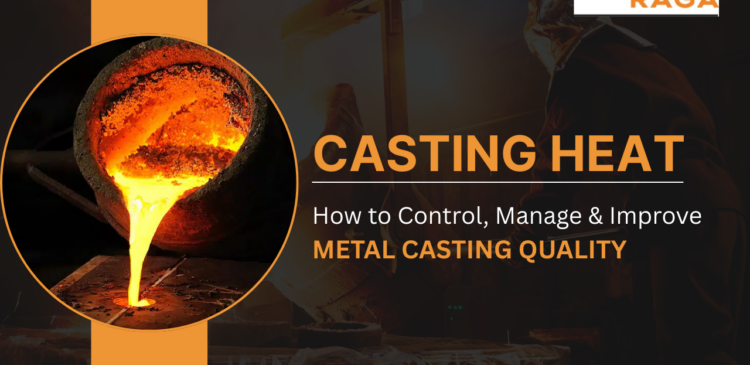
In metal casting, heat is both a driving force and a challenge. Casting heat refers to the high temperatures required to melt and shape metals, which determine the final product’s strength, accuracy, and finish. Effective heat control in metal casting and die casting is essential for maintaining casting quality and production efficiency. Without proper temperature management, even the most advanced molds or alloys can fail to deliver consistent results.
The Role of Heat in Casting
Heat in metal casting plays a vital role in shaping molten metal into precise forms. The process typically involves heating metals to temperatures ranging from 660°C (for aluminum) to over 1600°C (for steel), depending on the alloy.
Proper casting temperature ensures smooth metal flow, accurate mold filling, and uniform cooling. However, both overheating and underheating can cause serious casting defects from poor surface finish to structural weaknesses. Controlled casting heat management ensures dimensional accuracy and improved mechanical properties.
Problems Caused by Improper Casting Heat
When casting heat is not properly regulated, several issues arise:
- Cracks and shrinkage defects due to uneven solidification.
- Core pin breakage and tool wear from thermal stress.
- Reduced product strength caused by improper grain structure.
- Increased production downtime due to frequent mold repairs or tool failures.
These problems underline why heat management in die casting is not just about temperature, it’s about precision, timing, and balance.
Techniques to Manage Casting Heat
Controlling casting temperature effectively requires both traditional and modern approaches.
Traditional cooling methods include air cooling and water cooling, which have been used for decades to maintain thermal balance. However, modern systems now deliver far superior results.
Advanced heat management techniques include:
- Jet Cooling Systems – Provide targeted, high-speed cooling for specific die zones.
- Close Loop Jet Cooling – Maintains stable temperature cycles with minimal fluctuation.
- Vacuum Die Casting – Enhances thermal management by reducing trapped gases and enabling consistent heat dissipation.
These innovations greatly improve casting efficiency, reduce cycle times, and extend die life.
Advanced Heat Monitoring & Control
Modern casting heat control systems now use sensors, monitoring devices, and automation to maintain accuracy.
For instance, the Raga Monitoring System offers real-time temperature tracking across multiple die zones. It ensures balanced heat flow, preventing localized hot spots and maintaining uniform cooling rates.
Automated heat control in casting helps minimize human error, improves thermal consistency, and supports predictive maintenance all critical for high-quality die casting operations.
Benefits of Effective Heat Control
When casting heat is effectively managed, the entire production system benefits:
- Improved casting quality with fewer defects.
- Longer tool and die life, reducing replacement costs.
- Lower rejection rates, enhancing profitability.
- Higher production efficiency through optimized cycle times.
Effective heat management in die casting leads directly to better ROI and operational reliability.
Applications of Casting Heat Management
Casting heat management systems are widely used across multiple industries where precision and performance matter:
- Automotive industry – for engine parts, housings, and transmission components.
- Aerospace components – demanding high strength-to-weight ratios.
- Industrial machinery – ensuring durability under heavy loads.
- Precision die casting – for electronics, tools, and structural parts.
In all these sectors, controlled casting heat defines product consistency and long-term performance.
Future of Casting Heat Management
The future of metal casting temperature control is increasingly data-driven. Emerging technologies are transforming the foundry floor:
- AI & IoT in casting processes enable real-time decision-making and temperature optimization.
- Predictive maintenance powered by heat data analytics helps avoid costly breakdowns.
- Energy-efficient cooling systems minimize environmental impact while improving throughput.
The integration of smart systems ensures that the next generation of casting heat control will be more sustainable, accurate, and efficient.
Conclusion
In the world of metal casting, heat is the heart of the process. Controlling it effectively ensures product quality, process reliability, and cost efficiency.
With modern solutions such as Jet Cooling, Close Loop Systems, and Raga Monitoring Systems, manufacturers can now achieve next-level consistency and productivity.
Explore advanced casting heat solutions at RagaGroup
FAQs
Q1. What is casting heat in foundry processes?
Casting heat refers to the high temperature involved in melting and shaping metals during the casting process.
Q2. Why is heat control important in die casting?
It prevents defects, tool damage, and ensures better casting quality and surface finish.
Q3. What are modern solutions for casting heat management?
Jet cooling, close-loop systems, and real-time monitoring devices are the latest innovations.
Q4. How does poor heat control affect casting?
It causes cracks, shrinkage, low mechanical strength, and higher rejection rates.
Q5. Which industries need advanced casting heat management?
Automotive, aerospace, machinery, and electronics manufacturing rely heavily on effective heat management systems.
