
Aluminum Extrusion Dies: Process, Types & Applications
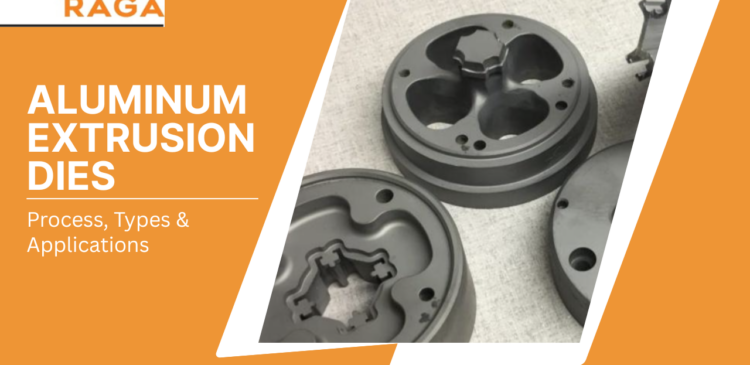
Aluminum extrusion is a manufacturing process where heated aluminum billets are forced through a die to create profiles of specific shapes and dimensions. This technique is widely used for producing lightweight, durable, and corrosion-resistant components across industries.
At the heart of this process lies the extrusion die, a precision tool that determines the shape, strength, and surface quality of the final aluminum profile. The accuracy and design of these aluminum extrusion dies play a crucial role in achieving high-quality extruded components with tight tolerances and excellent finish.
What Are Aluminum Extrusion Dies?
An aluminum extrusion die is a hardened steel tool designed to form molten or heated aluminum into continuous lengths of uniform cross-sections. During the extrusion process, the billet is pushed through the die under high pressure, and the aluminum takes the die’s shape as it exits.
Each extrusion die consists of key components the die plate, backer plate, bolster, and die cap, all designed to manage pressure, heat, and flow distribution effectively. The result is a perfectly shaped aluminum profile ready for cooling and finishing.
Types of Aluminum Extrusion Dies
Different types of extrusion dies are used depending on the design and application of the desired aluminum profile:
- Solid Dies: Used for creating profiles without hollows, such as bars, rods, and angles.
- Hollow Dies: Designed to form tubular or hollow aluminum sections, like pipes, channels, and enclosures.
- Semi-Hollow Dies: Used when partial hollows or intricate geometries are required.
- Custom Dies: Customized for specialized industrial profiles in automotive, aerospace, or architectural applications.
Each type requires specific design precision to ensure uniform flow, minimal distortion, and maximum durability during extrusion.
The Extrusion Die Design & Manufacturing Process
The design and manufacturing of aluminum extrusion dies demand both engineering expertise and advanced tooling. Key stages include:
- Die Design Considerations: Engineers analyze profile geometry, wall thickness, and flow characteristics to ensure optimal die performance.
- Materials Used: Tool steels such as H13 steel are most common due to their heat resistance and wear durability.
- Manufacturing Steps:
Die design → Heat treatment → Precision machining → Polishing → Testing. - Surface Finish & Tolerance: High-quality polishing and precision machining are essential for maintaining tight tolerances and superior surface finish in extruded parts.
A well-designed extrusion die ensures smooth metal flow, minimal stress, and a longer operational life.
How Extrusion Dies Work
The operation of an aluminum extrusion die involves several key steps:
- Heating the Billet: Aluminum billets are preheated to a temperature between 400°C–500°C.
- Applying Pressure: A hydraulic press forces the billet through the extrusion die opening.
- Shaping and Cooling: As the aluminum exits the die, it takes the desired shape and is rapidly cooled to retain structural integrity.
- Post-Extrusion Finishing: Cutting, aging, anodizing, or powder coating is done to enhance appearance and strength.
This process ensures consistent aluminum profiles with high dimensional accuracy and mechanical stability.
Common Challenges with Extrusion Dies
Despite technological advancements, extrusion die manufacturing faces several challenges:
- Die Wear and Breakage: Continuous exposure to high temperatures and pressures causes fatigue.
- Heat Management: Uneven temperature can distort the aluminum flow and affect profile accuracy.
- Dimensional Variations: Small die alignment errors can lead to defects in the final product.
- Cost Implications: Poor die design increases rejection rates and maintenance costs.
Proper thermal control, coating technology, and predictive maintenance are critical for overcoming these challenges.
Benefits of High-Quality Extrusion Dies
Investing in high-quality aluminum extrusion dies yields multiple advantages:
- Increased Production Efficiency: Smooth metal flow reduces cycle times.
- Extended Die Life: High-grade tool steels and optimized cooling extend operational lifespan.
- Consistent Product Quality: Precise design ensures repeatability and uniformity.
- Complex Profiles Made Possible: Enables production of detailed shapes with thin walls or multiple hollows.
Ultimately, precision dies lead to cost savings and higher productivity in extrusion plants.
Applications of Aluminum Extrusion Dies
Aluminum extrusion dies are vital in producing a wide variety of industrial and consumer products:
- Construction: Window frames, door panels, curtain walls, and facade structures.
- Automotive: Lightweight chassis parts, heat sinks, and crash-resistant profiles.
- Aerospace: Structural profiles with strength-to-weight optimization.
- Industrial Machinery: Frames, brackets, and mechanical supports.
- Consumer Products: Furniture, electronics, and home appliance components.
The versatility of extrusion die technology makes it indispensable across industries focused on lightweight and durable aluminum components.
Future Trends in Extrusion Dies
The future of aluminum extrusion die design is driven by innovation and sustainability:
- CAD/CAM Integration: Advanced software enhances die simulation and precision.
- AI & Simulation Tools: Predict flow behaviour and eliminate defects before production.
- Advanced Cooling Systems: Improved thermal management reduces die wear and boosts consistency.
- Sustainable Extrusion: Use of eco-friendly lubricants, recycled aluminum, and energy-efficient presses.
These advancements are reshaping the extrusion die industry, enabling faster, greener, and more accurate manufacturing processes.
Conclusion
Aluminum extrusion dies are the backbone of the extrusion industry, transforming raw billets into precision-engineered profiles that power modern infrastructure and technology.
By investing in advanced die design, quality materials, and smart cooling systems, manufacturers can achieve superior performance, cost savings, and long-term reliability.
Explore advanced solutions for extrusion die manufacturing at RagaGroup
FAQs
Q1. What is an aluminum extrusion die?
It is a steel tool that shapes heated aluminum billets into specific profiles during the extrusion process.
Q2. How long do aluminum extrusion dies last?
With proper maintenance and usage, high-quality extrusion dies can last for thousands of production cycles.
Q3. What materials are used to make extrusion dies?
Tool steels like H13 are commonly used due to their strength, heat resistance, and durability.
Q4. Can extrusion dies be customized?
Yes. Custom extrusion dies can be designed for unique profiles, industries, or specialized products.
Q5. Which industries rely most on extrusion dies?
Construction, automotive, aerospace, and consumer goods manufacturing are among the top users of aluminum extrusion dies.
